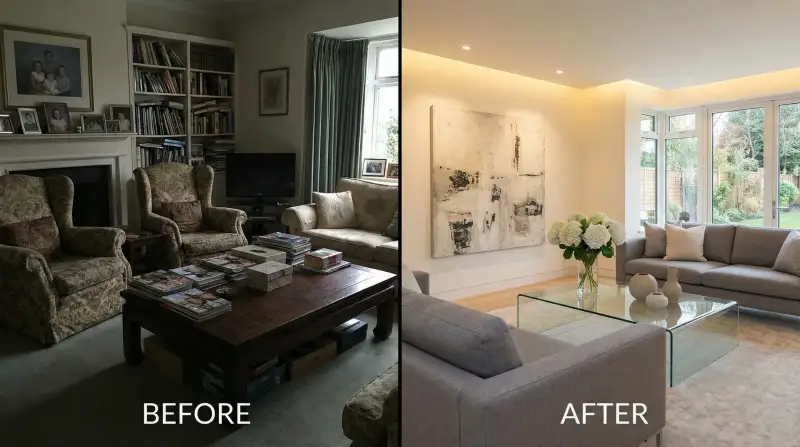
Staging is one of the most effective tools available to executors and families preparing an estate home for sale. According to industry data, professionally staged homes sell for 5 to 10 percent more than unstaged properties and spend significantly less time on the market. For an estate home valued at $1.2 million, that premium could translate to an additional $60,000 to $120,000 in the sale price, making staging one of the highest-return investments in the home preparation process.
Estate homes present unique staging challenges that differ from a typical owner-occupied sale. These properties have often been lived in by the same family for decades, accumulating layers of personal belongings, dated decor, and deferred cosmetic updates. The goal of staging an estate home is not to erase the home's history, but to present it in a way that allows potential buyers to see its full potential and envision their own lives within its walls.
Here are the key strategies for staging an estate home to maximize its appeal to today's buyers in the White Rock and South Surrey market.
Declutter and Depersonalize
The single most impactful step in staging any estate home is removing the clutter and personal items that have accumulated over the years. This is often the most emotionally challenging part of the process, as it involves sorting through a lifetime of memories and possessions. However, it is also the step that makes the greatest difference in how buyers perceive the property.
Begin by working through the home room by room, removing all personal photographs, religious items, collections, and memorabilia. These items, while meaningful to the family, make it difficult for potential buyers to see the home as their own. Store family keepsakes securely off-site or in a designated storage area within the home, such as a locked closet or the garage.
Next, reduce the overall volume of items in each room by at least 50 percent. Remove excess furniture, knick-knacks, books, and decorative items. The goal is to create a sense of spaciousness and order. Buyers are drawn to homes that feel open and airy, and overcrowded rooms feel smaller and less inviting. In kitchens, clear the countertops of small appliances, leaving only one or two attractive items such as a coffee maker or a decorative bowl of fruit. In bathrooms, remove all personal toiletries and replace them with a few neatly arranged towels and a simple soap dispenser.
Consider hiring an estate liquidator to manage the sale or donation of items that the family does not wish to keep. Professional liquidators can organize estate sales, coordinate charitable donations, and arrange for the efficient removal of remaining items. This approach saves the executor considerable time and effort while ensuring that valuable items are properly assessed and sold.
Lighten the Colour Palette
Many estate homes feature colour schemes that were popular in previous decades but may feel dated to contemporary buyers. Dark wood panelling, bold wallpaper patterns, and richly coloured walls can make rooms feel smaller and darker than they actually are. Updating the colour palette is one of the most cost-effective ways to modernize the home's appearance and create a bright, welcoming atmosphere.
Paint the walls in warm, neutral tones such as soft white, light grey, or warm beige. These colours create a clean canvas that appeals to the widest range of buyers and allows natural light to bounce around the room, making spaces feel larger and more inviting. Avoid pure white, which can feel cold and clinical, in favour of whites with warm undertones that create a cosy, liveable feel.
If the home has dark wood panelling, consider painting it in a light colour rather than removing it entirely. Painted panelling can look surprisingly modern and attractive, and the cost of painting is far less than the cost of removal and drywall installation. Similarly, dated wallpaper should be removed and replaced with fresh paint, as wallpaper is a highly personal choice that rarely appeals to prospective buyers.
Pay attention to trim, baseboards, and doors as well. Painting these elements in a crisp white creates a finished, polished look that complements the neutral wall colours. If the home has dark-stained interior doors, painting them white can dramatically brighten hallways and rooms, creating a cohesive, updated feel throughout the home.
Update Fixtures
Outdated light fixtures, cabinet hardware, faucets, and door handles are small details that collectively create a strong impression of a home's age and condition. Replacing these elements is relatively inexpensive but can have a dramatic impact on how modern and well-maintained the home appears to buyers.
Start with lighting fixtures, which are among the most visible elements in any room. Replace dated brass chandeliers, fluorescent kitchen fixtures, and ornate bathroom vanity lights with simple, contemporary alternatives in brushed nickel, matte black, or satin brass. Modern fixtures with clean lines and warm-toned finishes complement a wide range of interior styles and make the home feel current without being trendy.
In the kitchen, update cabinet knobs and pulls to a consistent, modern style. This small change can make older cabinets look surprisingly refreshed, especially when combined with a thorough cleaning and, if needed, a fresh coat of paint on the cabinet faces. Replacing a dated kitchen faucet with a modern, high-arc model in a coordinating finish can also elevate the entire room's appearance for a modest investment.
In bathrooms, replace worn or discoloured faucets, towel bars, and toilet paper holders with matching contemporary hardware. A new mirror frame, updated vanity lighting, and fresh caulking around the tub and shower complete the transformation. These targeted updates signal to buyers that the home has been thoughtfully maintained and that they can move in without facing a long list of small repairs.
Throughout the home, replace worn or mismatched door handles, hinges, and switch plates with consistent, modern options. These details may seem minor individually, but together they create a cohesive, polished impression that resonates with buyers at both a conscious and subconscious level.
Highlight Architectural Features
One of the greatest advantages of estate homes is that they often feature architectural details and craftsmanship that are not commonly found in newer construction. Rather than trying to disguise the home's age, effective staging celebrates these unique features and positions them as selling points.
Original hardwood floors, which are a hallmark of many estate homes in White Rock and South Surrey, should be professionally cleaned and refinished if needed. The warm tones and natural character of hardwood floors are highly valued by today's buyers, and revealing them beneath old carpeting can be a revelation. If the floors are in good condition, a thorough cleaning and polish may be all that is needed to make them shine.
Crown mouldings, wainscoting, built-in bookshelves, and window seats are all features that add character and charm. Ensure these elements are clean, well-maintained, and highlighted during showings. Painting built-in bookshelves in a fresh, light colour can make them feel modern while preserving their classic appeal. Arrange a few carefully chosen books and decorative objects on the shelves to create an inviting vignette without cluttering the space.
If the home has a fireplace, make it a focal point of the staging. Clean the firebox, polish or paint the surround, and arrange the mantle with a simple, elegant display. A fireplace is a highly desirable feature in the White Rock market, where cooler winters make it both practical and atmospheric. During showings in the cooler months, a lit fire creates an irresistible sense of warmth and welcome.
Large windows, vaulted ceilings, and unique architectural shapes should all be showcased through careful furniture placement and lighting. Avoid blocking windows with heavy furniture or tall shelving, and use lighting to draw attention to interesting ceiling details or alcoves. The goal is to help buyers appreciate the home's unique character and the quality of its original construction.
Create Flow
The way a home flows from one room to the next has a significant impact on how buyers experience the property. A home that feels open, connected, and easy to navigate creates a positive emotional response, while a home that feels choppy, cramped, or confusing can leave buyers feeling uneasy, even if they cannot articulate why.
Start by ensuring clear pathways through every room and between rooms. Remove any furniture that blocks natural traffic patterns or makes it difficult to move through the space. In living rooms and family rooms, arrange seating to create a natural conversation area that draws people in. In dining rooms, ensure there is adequate space around the table for guests to move freely. In bedrooms, position the bed as the focal point and leave enough space on either side for nightstands and easy access.
Pay attention to the transitions between rooms. Ensure that doors open and close smoothly, that sight lines from one room to the next are attractive, and that the overall layout makes intuitive sense. If the home has an unusual floor plan, use furniture placement and visual cues such as area rugs and artwork to guide visitors naturally from one space to the next.
Consider the flow of the entire showing experience, from the moment a buyer pulls up to the curb to the moment they step out the back door. A welcoming front entrance, a logical progression through the main living areas, and a compelling backyard or outdoor space create a narrative arc that leaves buyers with a positive, memorable impression of the home.
For estate homes with multiple levels, ensure that each floor has a clear purpose and that the transition between levels feels natural. If the home has a finished basement, stage it as a distinct living area with its own identity, whether that is a family room, a home office, or a recreation space. Avoid using lower levels as dumping grounds for items removed from the main floors, as buyers will explore every part of the home and form impressions based on what they see.
About the Author
The BC Estate Homes team specializes in helping executors and families navigate the complexities of estate sales in White Rock and South Surrey. With decades of combined experience in probate, real estate, and estate planning, we provide expert guidance every step of the way.